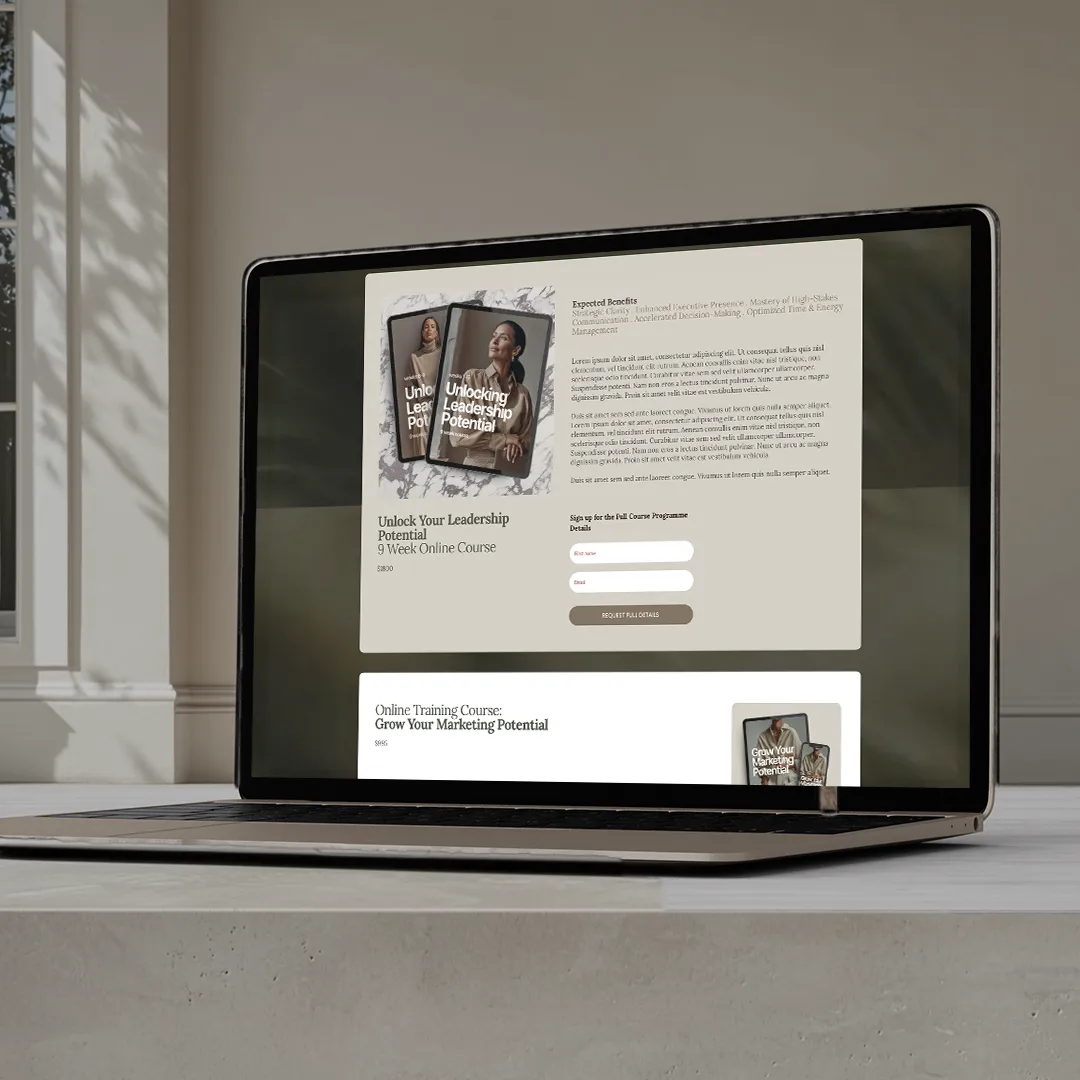

Setting up a sales funnel used to require either a developer or a lengthy self-build project across multiple tools. Neither option is practical for a solopreneur or early-stage coach. Platforms like Systeme.io have changed that equation, and with the right pre-built system, a fully functional funnel can be live in days rather than weeks.
This guide covers what a sales funnel actually requires, how to set one up without technical skills, and why the “all-in-one” approach is the most stable path for service-based businesses.
What a sales funnel needs to actually function
A sales funnel is not a single page. A functioning funnel for a coach or course creator typically includes a sequence of highly specific touchpoints:
-
Lead Capture:
A high-converting landing page designed to solve a specific problem in exchange for an email address.
-
Sales Architecture:
A seamless flow from offer page to checkout, including order bumps and upsell sequences to maximize average order value.
-
Automation Engine:
Native email sequences triggered by user behavior (opt-ins or purchases) to maintain momentum without manual intervention.
Without these elements working in sequence, you are capturing interest but not converting it. While page design is visible, the architecture determines revenue. For a deeper look at this logic, read our guide on what a sales funnel is and why coaches need one.
The technical requirements for a stable setup
To have a professional-grade funnel that actually hits the inbox, your Systeme.io setup must be grounded in three technical configurations:
Custom Domain Mapping
Running a funnel on a “systeme.io” subdomain signals an amateur operation. Mapping your own domain is the first step in building brand authority.
DKIM and CNAME Records
For your email sequences to avoid the spam folder, you must authenticate your domain within the Systeme.io settings. This creates the “handshake” between your domain and the email servers.