

Most founders using Canva have set up a brand kit. Colors saved, fonts added, logos uploaded. It is a useful feature and a reasonable starting point. But there is a meaningful difference between a brand kit and a brand identity guide, and confusing the two creates problems that typically surface later: inconsistent content, unclear brand direction for collaborators, and a visual identity that looks assembled rather than designed.
What a Canva brand kit actually does
A Canva brand kit is a settings feature. It stores your primary brand colors, fonts, and logo files so that they are accessible when you create new designs within Canva. It is functional and genuinely time-saving for founders who work primarily within Canva.
What it does not do: it does not explain when and how to use each element. It does not document your brand rationale. It does not cover imagery direction, tone of voice, or usage rules. And it cannot be shared as a standalone deliverable because it exists only within your Canva account.
What a brand identity guide is
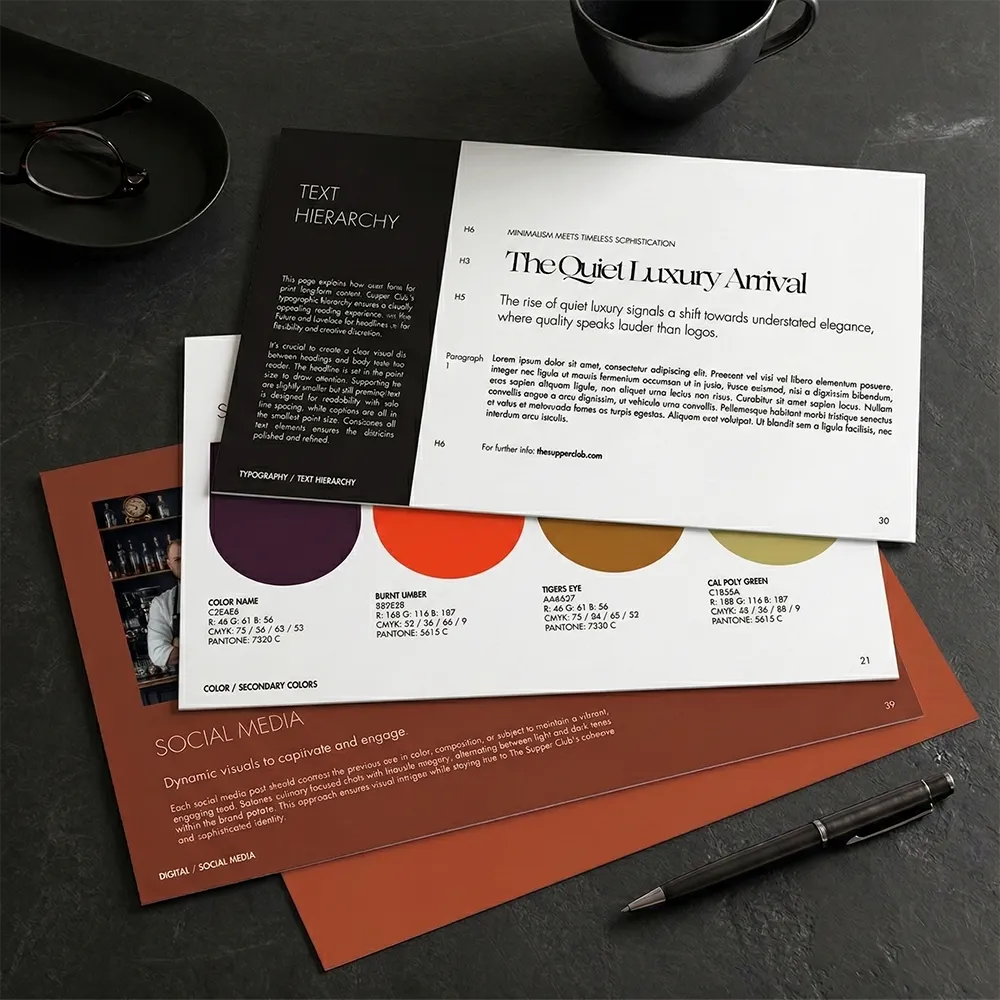
A brand identity guide is a document. It is typically 20 to 40 pages and covers every dimension of your visual and verbal identity in one complete reference. A professionally structured brand identity guide includes: logo files in every approved variation with clear spacing and sizing rules, the full color palette with primary, secondary, and accent colors specified by hex, RGB, and CMYK, a typography system covering all typefaces with usage hierarchy, imagery direction with examples of on-brand and off-brand photography, tone of voice guidelines covering language and communication principles, and usage examples showing the brand applied across key touchpoints.
The practical difference
| Feature | Canva Brand Kit | Brand Identity Guide |
| Stores Brand Colors | Yes | Yes |
| Stores Fonts | Yes | Yes |
| Stores Logos | Yes | Yes |
| Covers Logo Usage Rules | No | Yes |
| Documents Color Rationale | No | Yes |
| Full Typography Hierarchy | Basic | Complete |
| Imagery Direction | No | Yes |
| Tone of Voice | No | Yes |
| Shareable as a Document | No | Yes |
| Usable to Brief Contractors | No | Yes |
| Works Outside Canva | No | Yes |
The moment you start working with other people, a brand kit becomes insufficient. A social media manager, web designer, photographer, or content contractor cannot access your Canva brand kit settings. They need a document.
What this costs without a template
A brand identity guide produced by a design agency typically costs between $2,000 and $8,000 depending on the studio and scope. For early-stage founders, that investment is difficult to justify before the business has established a revenue base.
The practical alternative is a professionally structured template that provides the complete document architecture and design presentation, which you populate with your own brand decisions. This produces a guide that covers every element a proper brand identity guide should address, at a fraction of the agency cost.
Alter Edit brand identity guide templates
Alter Edit brand identity guide templates are built in Canva, structured to professional agency standard, and produce a shareable PDF output that covers every element of a complete brand guide. You populate the template with your brand decisions. The design quality, page structure, and visual hierarchy are already built.
The output is a document you can share with contractors, use to brief collaborators, and refer to yourself as your business grows.
The verdict
A Canva brand kit is a useful feature that saves time within Canva. A brand identity guide is a different and more significant thing: a complete brand reference document that makes every external and internal brand decision faster and more consistent.
Founders who want to work with collaborators, build a consistent content presence, or simply operate with clarity about their own brand need the guide. The cost barrier that previously made this an agency-only deliverable no longer applies.